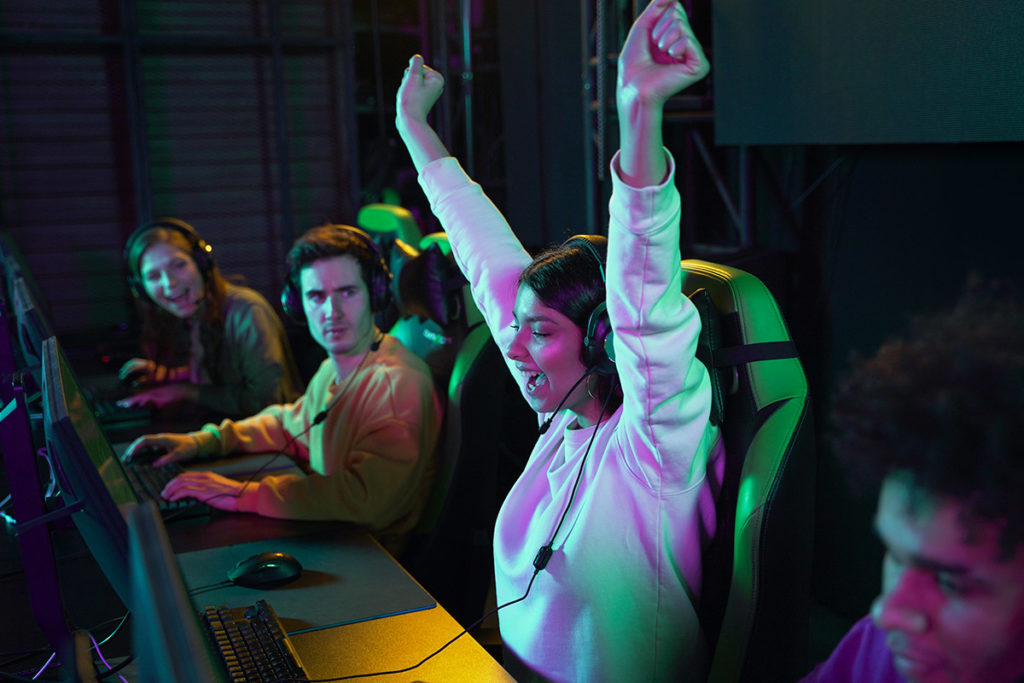
Gaming is one of the most time-intensive hobbies in existence. That makes the question of how we approach it — in terms of time, attention, physical posture, social relationships, and mental health — more important than most people acknowledge.
This isn't an article designed to make anyone feel guilty about how much they play. If you find genuine enjoyment, relaxation, or social connection in gaming, those are real goods worth having. The goal here is something more specific: to think clearly about what a healthy relationship with gaming actually looks like, and what patterns tend to undermine it.
The conversation around gaming and wellbeing has improved significantly over the past decade. We've moved away from the kind of moral panic that treated any substantial gaming as inherently problematic. At the same time, the opposite tendency — to treat any concern about gaming's effects as simply reactionary — isn't especially helpful either. The honest answer is more nuanced than either extreme.
Understanding What Gaming Gives You
One of the most useful starting points for thinking about your relationship with gaming is understanding what you're actually getting from it. People play games for quite different reasons, and the patterns that serve one set of reasons may not serve another.
Some people primarily play for the challenge — the satisfaction of developing skill at something difficult, solving problems under pressure, or competing against others at a high level. For these players, the sense of progression and achievement is central to the appeal. Games designed around competitive ladders, skill-based progression, and mastery loops are particularly well-suited to this orientation.
Others play primarily for narrative and emotional experience — the equivalent, in other media, of reading novels or watching films. These players are drawn to games with rich worlds, strong writing, and characters they find genuinely engaging. The time investment in these games is qualitatively similar to the time investment in any other form of storytelling you care about.
A substantial portion of players are there for social reasons — playing with friends, building communities around shared games, or using multiplayer experiences as a context for maintaining relationships. For these players, gaming is primarily a social activity with a game-shaped vehicle around it. The social value is real and shouldn't be dismissed.
And many people play for relaxation and decompression — to disengage from the demands of work or daily life, to occupy the hands and part of the mind with something low-stakes and pleasurable. This is a legitimate use of leisure time, no different from watching television or reading a casual novel.
Understanding which of these (or which combination) you're primarily seeking helps you make better choices about what you play and when. It also helps you notice when the way you're playing has drifted from what actually serves those underlying needs.
The Patterns Worth Paying Attention To
The most common way that gaming habits become problematic isn't through a single dramatic shift but through gradual drift — patterns that develop slowly and feel normal until they're viewed from a distance.
One of the clearest warning signs is playing in ways that feel compulsive rather than chosen. There's a real difference between playing because you want to and playing because stopping feels uncomfortable or anxious. Many modern games — particularly free-to-play titles and competitive multiplayers — are explicitly designed to make stopping feel costly, to create patterns of commitment and return that are difficult to break. Being aware of this design intention doesn't neutralise it, but it at least makes it visible.
Sleep disruption is another pattern worth taking seriously. Gaming late into the night is genuinely attractive — the hours after everyone else has gone to bed often feel like reclaimed personal time, and the engagement of games makes it easy to override tiredness signals. But the accumulated sleep debt from sustained late-night gaming has real effects on mood, cognitive function, and physical health. This is one area where the wellbeing costs are fairly well-evidenced and are worth weighing honestly.
"A healthy relationship with any hobby looks like: it enriches your life without crowding out the other things that also matter."
Physical considerations are also worth taking seriously for anyone who plays for extended periods. Sedentary posture, repetitive strain in hands and wrists, and eye strain from sustained screen time are genuine occupational hazards of heavy gaming. None of them are inevitable, but they do require active management — taking breaks, maintaining ergonomic setups, doing the stretches that feel unnecessary until they aren't.
Gaming and Other Parts of Your Life
A useful frame for thinking about gaming habits is to consider how they interact with the rest of your life rather than treating gaming as a thing to be evaluated in isolation. The question isn't simply "am I gaming too much?" but "is the way I'm gaming leaving me enough time, energy, and attention for the other things I care about?"
For most people, gaming exists alongside commitments to work, to relationships, to physical health, and to other interests. When those other areas are being served reasonably well, gaming occupying a significant chunk of leisure time isn't a problem. When gaming is consistently crowding out those other areas — when you're choosing sessions over sleep, over social commitments, over exercise, over activities that would address other genuine needs — that's when the balance is probably worth revisiting.
It's also worth thinking about the difference between active and passive displacement. Playing games instead of watching television is a different kind of choice than playing games instead of exercising or sleeping. Not all activities displaced by gaming are equivalent, and a moral framework that treats all of them as equally important misses this distinction.
Young People and Gaming Habits
The question of healthy gaming habits is somewhat different for children and teenagers than for adults, and deserves separate consideration. Young people are developing their relationship with games during a period when habits form easily and when the competing demands on their time — schoolwork, physical development, face-to-face social skills — are particularly important.
The research on gaming and young people is less alarming than media coverage typically suggests, but it does suggest that extended sessions, particularly late at night, have measurable effects on sleep and academic performance in some groups. The evidence also suggests that the social dimension of gaming is important — playing with friends, whether online or in person, produces different outcomes than isolated solitary play.
Parents managing their children's gaming time are in a genuinely difficult position. Blanket restriction often creates resentment and drives gaming underground. But unlimited access, particularly to online multiplayer games with social pressures and competitive dynamics, comes with real risks. The most effective approaches seem to be those that treat gaming as one of many legitimate activities rather than as inherently suspicious — ones that involve children in conversations about balance rather than simply imposing limits from outside.
Practical Approaches
Rather than prescriptive rules, what most people find useful is a set of principles they can apply to their own situation with awareness of what they're actually trying to achieve.
Setting natural stopping points rather than time limits tends to work better than clock-watching. Finishing a quest, reaching a save point, completing a match — these feel like real ending moments and are more psychologically satisfying as stopping places than arbitrary time-based cutoffs. Building your session around these natural boundaries also creates a habit of playing with endpoint awareness rather than indefinitely.
Being deliberate about the relationship between gaming and sleep matters more than many players acknowledge. A simple rule of stopping long enough before bed to genuinely wind down — even just 30 minutes of lower-stimulation activity — produces measurable sleep quality improvements for many people. It's a small adjustment with a disproportionate effect on how you feel the following day.
Paying attention to your mood before, during, and after gaming sessions is genuinely useful diagnostic information. If gaming reliably leaves you feeling refreshed, relaxed, or socially connected, that tells you something. If it reliably leaves you feeling drained, frustrated, or like you've wasted time, that also tells you something. Most people don't pay explicit attention to this, which means patterns that aren't serving them well can persist much longer than they should.
The Bigger Picture
Gaming, approached thoughtfully, can be a genuine source of joy, connection, and intellectual engagement. It can provide challenge, narrative depth, relaxation, and the social texture of shared experience. None of that requires treating it as a problem in need of management.
The conditions under which gaming becomes something worth examining more carefully are specific: when it's consistently displacing things you need, when playing feels driven by anxiety rather than desire, when the pattern serves the game's retention mechanics rather than your actual interests. These aren't universal conditions. They don't apply to most players most of the time.
The goal isn't to play less, necessarily. It's to play in ways that actually deliver what you're looking for — and to notice clearly enough when they're not.